
June 9, 2026
Standing out in a crowded cybersecurity market: what separates the funded from the overlooked
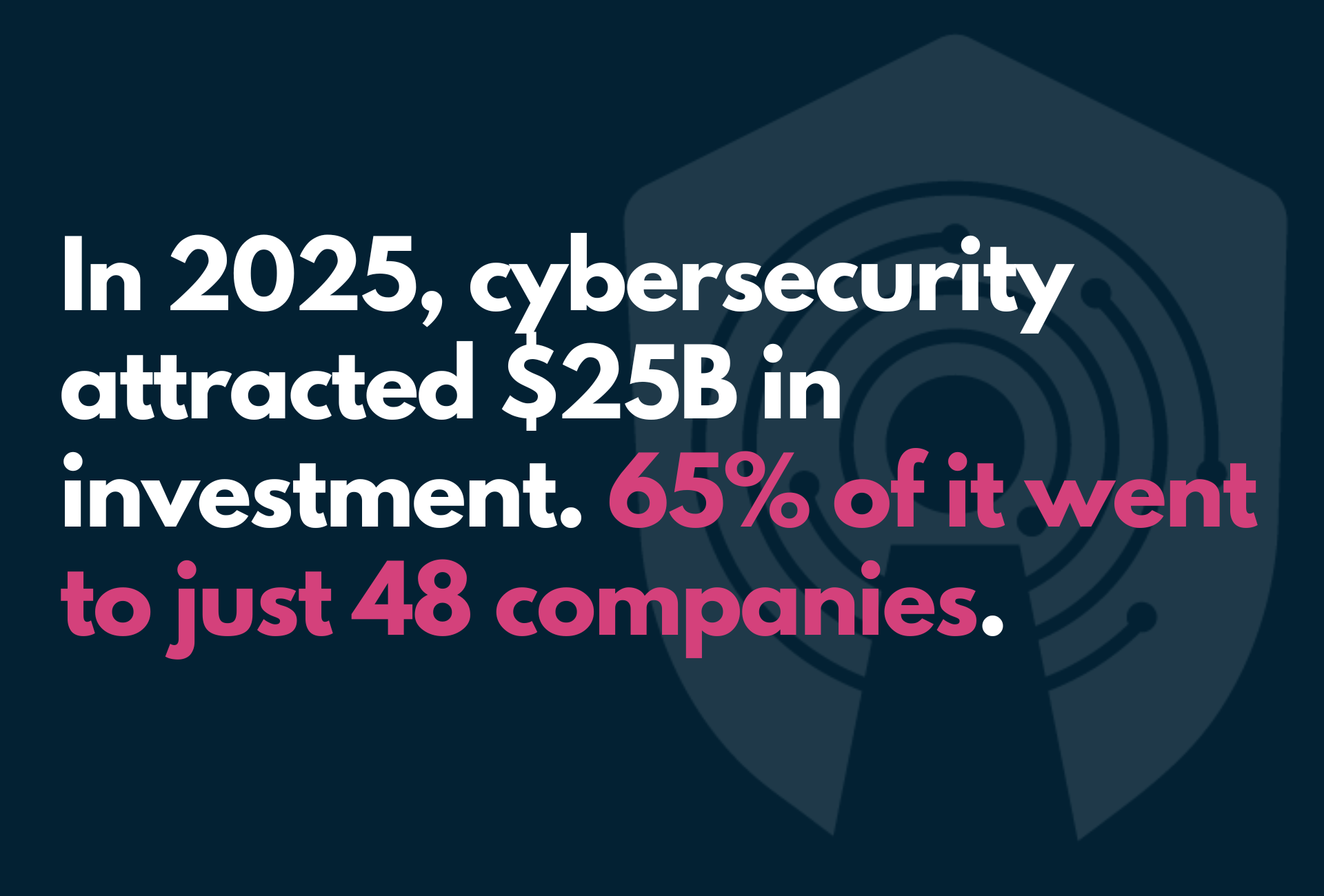
The good news: funding is available. The not so good news is that it’s going to a select few (65% of that funding went to 48 companies), which suggests investors are choosing firms that have a proven and solid go-to-market (GTM) strategy. These cybersecurity companies at the top of the food chain are reaping the rewards while the rest — smaller and less differentiated players — are fighting for scraps.
This means that differentiation is harder and more important than ever before, especially when you consider there are more than 3,500 vendors occupying the space. The answer: ensuring your GTM strategy is credible and well formed — defined ICP, clear narrative and evidence of repeatability.
The overcrowding challenge
The problem with competing in such a saturated market is how to make your company and your solution stand out. It’s not a new problem, but it’s one affecting the majority of cybersecurity vendors – 72% of emerging vendors said this was their main problem. Lack of differentiation impacts the way both potential customers and investors view the business and the associated opportunities. Here, there is no room for a mistake in GTM strategy because it doesn’t matter how good your product or solution is if your messaging and positioning are off base.
The evolution of messaging
A few decades ago, marketing, advertising and messaging was product focused. The shift to a solutions approach changed the way GTM teams worked. In the same way, today’s messaging can’t be focused on features any longer. B2B buyers don’t buy features, they buy outcomes.
This point was made several times in our recent Q&A interview series. Mark Terry, Head of Marketing for CyberOne, says they solved their differentiation challenge by identifying a gap in how the mid-market (CyberOne’s key audience) is communicated with.
“The opportunity here is…focusing more on business outcomes than technical jargon. Our approach is how do we add value to their business? It’s about how we move the dial from protection to resilience.”
For Ed Macnair, CEO of TrustLayer (previously Censornet), it is about active listening and not getting caught up in what you want to say but more in understanding exactly what challenges customers are experiencing.
“I think it’s probably the same for all industries. It’s about really understanding exactly what your customer’s needs are, being creative, being open, and being an active listener. Specifically for cybersecurity, it’s also really important that you know and understand what the implications are for the customer’s organization.”
The most expensive GTM mistake: trying to win everywhere
The key to good messaging, therefore, is being able to get under the hood of who your customers are and what they need. One of the biggest mistakes that companies make is going after everyone. Strong GTM teams fight against this, building tight and well-defined ICPs that work for their business.
Claire Pitman-Massie, VP of Field, Digital and Channel, Marketing, EMEA, for Ping Identity is using verticalization on an enterprise level. This enterprise-level strategy targets sectors where Ping has deep credibility and makes the most of the success they’ve had with similar companies.
For startups, this is doubly as important; a narrow, well-understood ICP means sharper messaging, faster sales cycles and a story that investors can back. Because investors are not backing ‘we do everything’ platforms.
Why trust wins deals
Trust is important in every market — but more so in cybersecurity where the stakes are higher when companies get it wrong. And in a market that’s this crowded, credibility becomes a powerful tool to elevate yourself above the competition. Strong GTM teams prioritize credibility building and social proof using assets like case studies and testimonials. Mark Terry and CyberOne’s approach of using social proof and consultancy engagements as a ‘gateway’ for prospects to experience the relationship and expertise, is a practical model for startups and early-stage companies. Content marketing only works when there’s something substantial behind it.

The foundations of GTM success
Overall, strong GTM teams (regardless of size of business or where they are in their growth journey) define and defend a clear ICP, they build a compelling narrative and not just a product pitch, and they focus on where they win, not trying to win everywhere.
What this shows is that a solid GTM strategy isn’t just good on paper. According to the insights gained from our Q&A series it’s aligning sales and marketing, having customer empathy and using active listening to get to the heart of their challenges, and hiring for hunger and adaptability over a perfect resume.
Conclusion: growth follows clarity
The cybersecurity market rewards clarity. Investors back it. Buyers trust it. And in a landscape where 3,500 vendors are competing for the same attention, the companies that win are the ones who know exactly who they serve, why it matters, and how to say so. That starts with the GTM team. Getting the right people in place, aligned around a compelling narrative and a well-defined ICP, isn’t just a growth lever. In today’s market, it’s a vital survival tool.
If you’re looking to strengthen or build your GTM team, we can help. Our Pay-As-You-Grow model is designed specifically for startups and early-stage companies to help fuel growth while extending your runway.
Or, if you’re a GTM professional looking to add value in the cybersecurity market, get in touch to find out how we help.